

During the recent Yale Alumni Association Assembly and Yale Alumni Fund Convocation, alumni leaders from several Shared Interest Groups (SIGs) served on a panel program, offering fellow Yalies their insights, lessons learned, and practical strategies for navigating uncertainty and overcoming challenges during times of transition within their respective groups.
Shared Interest Groups are alumni-led, mission-driven organizations that connect and intersect the alumni community, bridging different years, classes, majors, professions, locations, backgrounds, and experiences.
Moderating the panel discussion was Miko McGinty ’93, ’98 MFA, chair of the Yale Alumni Art League. The speaker lineup consisted of:
- Erika Monique Schoenthal ’16 MBA – Board Chair, Yale Veterans Association
- Belinda Wu ’15 MPH – Immediate past chair and board member, YaleWomen
- Anita Kishore ’99 – Board member, Yale Science and Engineering Association

According to McGinty, a graphic designer whose eponymous firm works with museums and cultural institutions, SIGs provide exciting opportunities for alumni to combine and integrate their personal and professional interests.
“SIGs align with experiences alumni felt passionate about while they were at Yale,” she said. “Visual art was core to my Yale experience, both as an undergraduate and as a graduate student—for me, the [Yale Alumni] Art League directly connects these experiences with those in my professional career and brings them up to the present day.”
McGinty pointed out that a defining characteristic of SIGs is the strong emphasis on service.
“Throughout the program, I really felt moved by the deep values of each of these groups and of the groups represented by the attendees,” she said. “There is a shared sense of mission that connects us all, and this was evident throughout our discussion.”
For Schoenthal, an active-duty U.S. Navy officer with over 20 years in uniform, the service component was a significant factor in her involvement with the Yale Veterans Association.
“The experience of being a veteran is wholly unique, and not many folks can understand it unless you’ve served,” she said. “As Yalies, it’s important that we continue to advocate for veterans on campus and in the community.”
Schoenthal noted her appreciation in being able to meet with and learn from other volunteers.
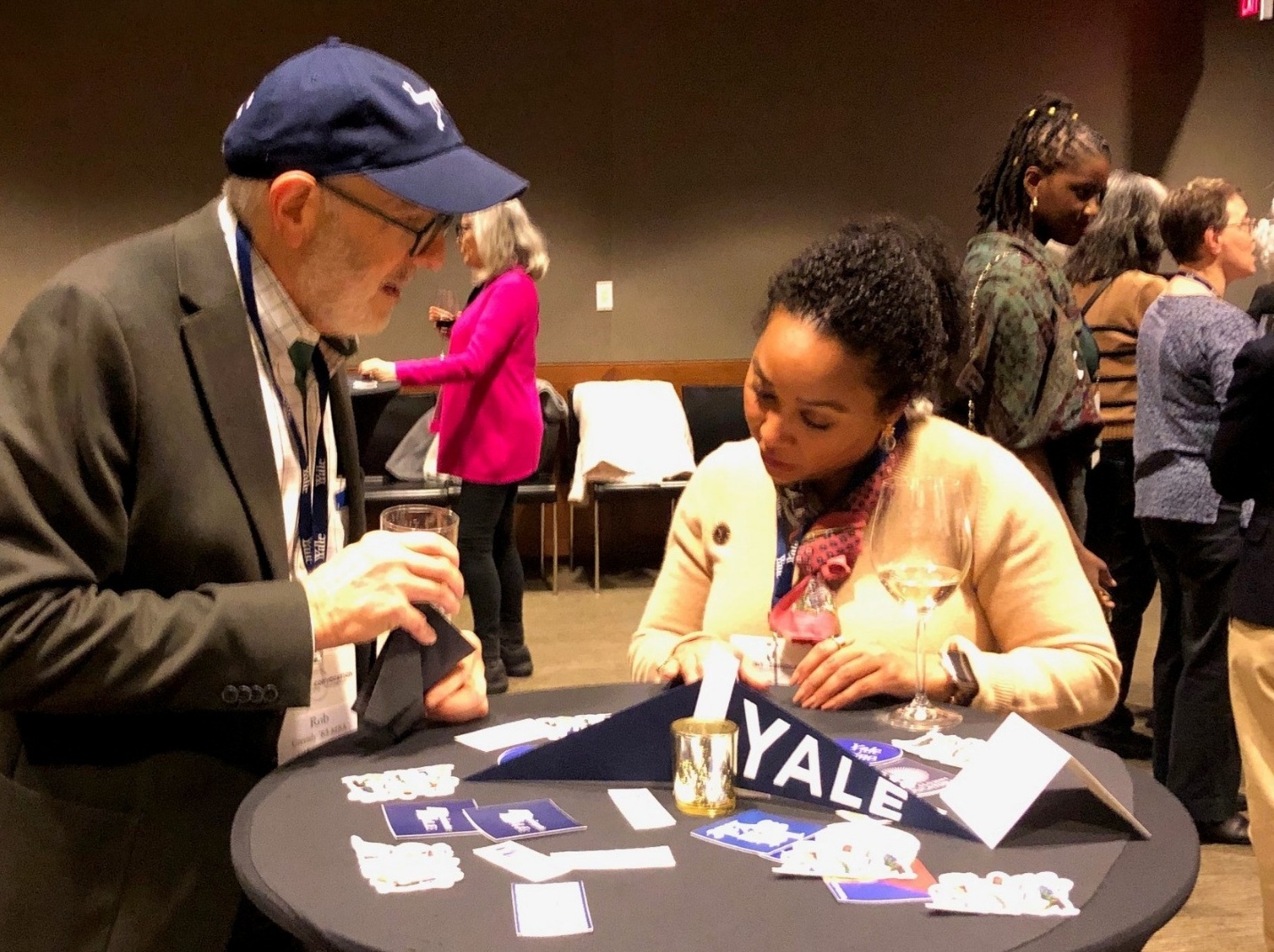
“It was really refreshing to meet and talk with other SIG leaders and see that we share a lot of the same problems,” she said. “A huge takeaway for me was that other SIG leaders were working through some of the same things, including member engagement, leadership dynamics, scaling, and organizational longevity. Talking about and working through lessons learned – what worked, what didn’t work – was incredibly energizing for me.”
Wu, who, in addition to her involvement with YaleWomen, also serves on the YAA Board of Governors and works at the intersection of technology, innovation, and healthcare, shared several recommendations for alumni leaders on managing and uplifting their groups.
“Respect institutional memory—but don’t be ruled by it. Longtime volunteers hold important context—honor it. But be clear about what’s changed and why. People respond best when change is framed as evolution, sustainability, and strengthening impact, not as internal housekeeping.”
Wu added that getting involved as an alumni volunteer can be a very gratifying experience, with low barriers for entry.
“Start small. Pick a cause you care about, show up once, and see how it feels,” she said. “Volunteering has a way of opening doors you didn’t expect. It is one of the easiest ways to turn your values into action. Most people are surprised by how much they get back from it.”
Kishore, an executive coach and former scientist and management consultant, highlighted the significance of robust organizational leadership and governance, particularly in an increasingly technologically-driven environment.
“Leadership matters! There is no one-size-fits-all approach to leading an organization through change,” she said. “Yes, the mission points the way, but the priorities come down to the values of the leadership.”
Photographer Credit: Henry Kwan


